
Content List
Preparing Your Business For Acquisition
Vlad Zghurskyi
19.01.2026
15 Min Read
If you run a small company or a mid-sized operation, preparing your business for acquisition is one of the biggest strategic decisions you will ever make.
It’s the result of intentional planning, clear positioning, and a disciplined execution of the acquisition plan.
The goal is rarely to simply sell your business. Rather, to make your company more attractive, negotiate from a position of strength, and ensure a smooth transition for the buyer, your team, and your future.
But how exactly should you ensure that your business is ready for a smooth acquisition? What needs to be done to ensure your approach to M&A is actually effective?
The following steps will help you to prepare for a successful M&A transaction. Read on.
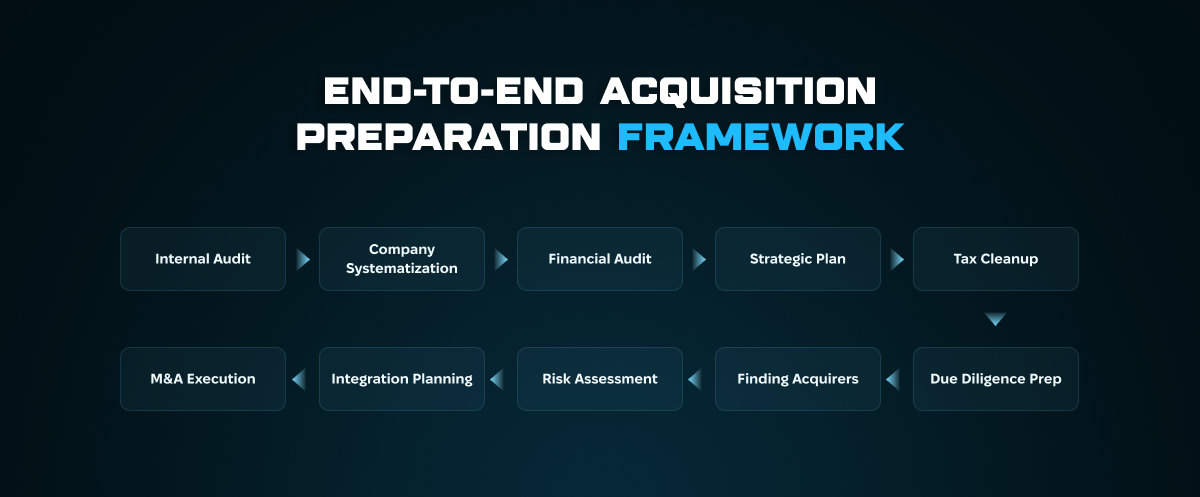
How To Prepare Your Business For Acquisition
Preparing a company for a successful acquisition in any M&A landscape requires a careful planning process. You will also need a team behind you that is experienced in mergers and acquisitions.

Internal Audit
- Financial statements (accuracy, completeness, consistency)
- Operational efficiency and bottlenecksOperational efficiency and bottlenecks
- Leadership team and management structure
- Intellectual property, assets, contracts, and obligations
- Cash flow reliability
- Scalability, recurring revenue, and revenue concentration
This is also the stage where you identify anything that could hurt valuation—dependency on a single client, outdated systems, inefficient workflows, or unclear ownership of assets.
A thorough internal audit lets you position your company properly and prepares you for the due diligence process later.
Company Systematization
Acquirers want a business that runs well with or without you.
- Standard operating procedures for marketing, sales, support
- Clear responsibilities for the management team
- Workflow maps
- Documented performance metrics
When a business is systematized, it becomes easier for the acquirer to integrate, manage, and scale. It signals stability, lowers risk, and increases the likelihood of a successful deal.
Financial Audit
A professional financial audit is one of the essential steps in your acquisition strategy. Your financial health is the first thing any acquirer will scrutinize.
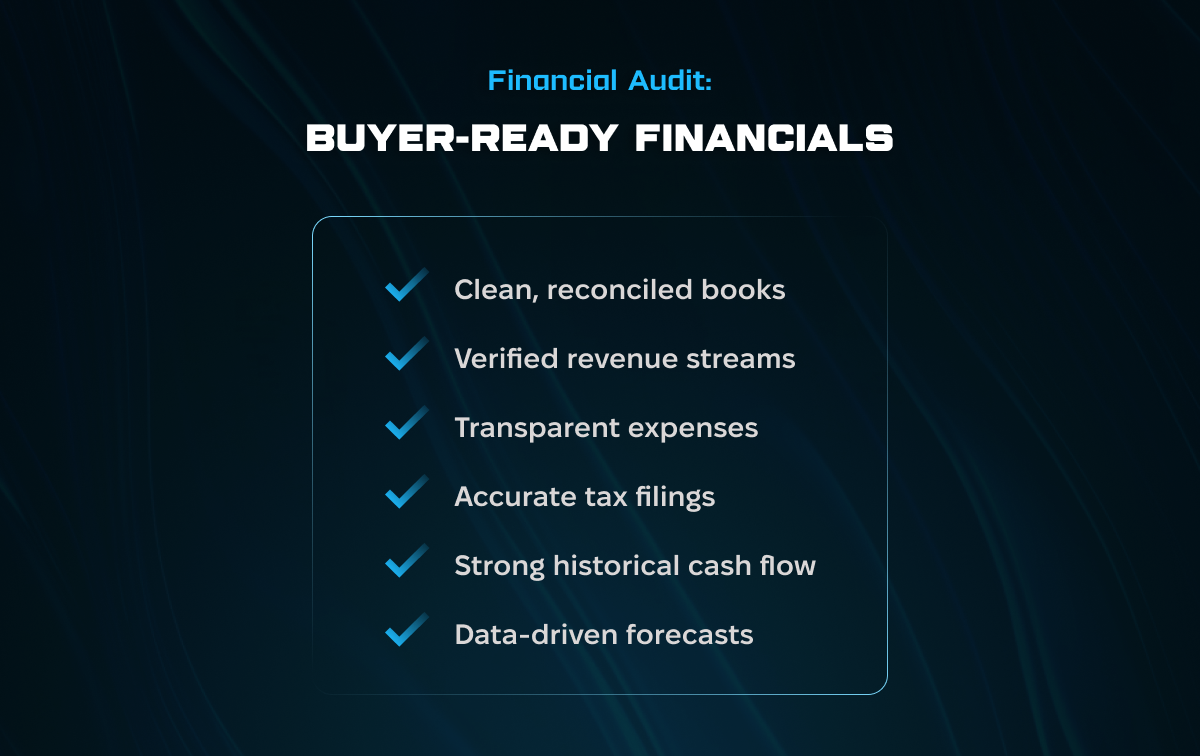
Financial clarity helps with valuation, reduces friction during negotiation, and ensures a smoother journey through the M&A process.
Strategic Plan
Beyond numbers, buyers want to see a strategic roadmap. This is your chance to show your company’s direction.
- Current market position
- Growth opportunities
- Expansion pathways into new markets
- Competitive advantages
- Risks and mitigation strategies
- How the business fits within another company’s larger acquisition strategies
A coherent strategic plan demonstrates that your company is future-ready.
Resolve Tax Issues If You Have Them
If you have tax issues, fix them before entering the M&A transaction.
- Back taxes
- Payroll issues
- Incorrect filings
- Liability disputes
Once cleaned up, document everything clearly. This strengthens your financial position and makes the rest of the acquisition process smoother.
Due Diligence
You don’t start preparing for due diligence when the buyer arrives. You prepare months in advance.
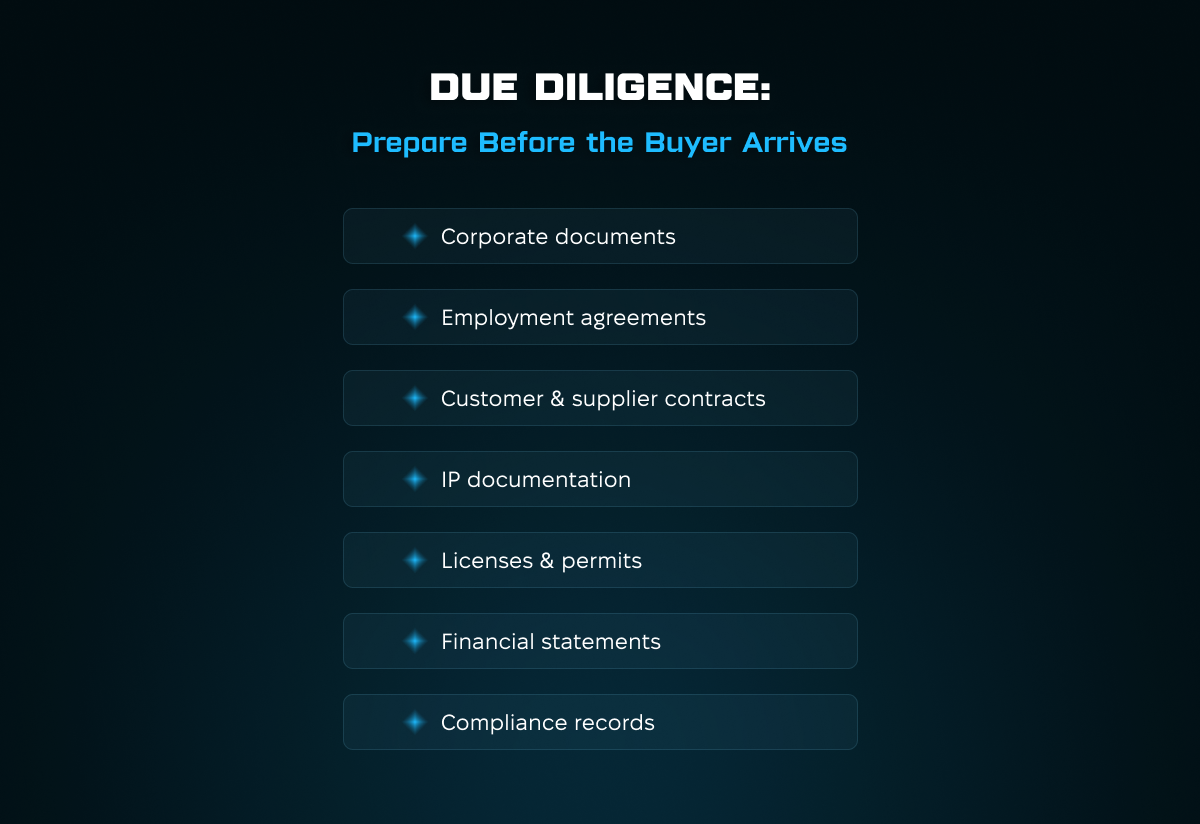
A strong due diligence package shows professionalism and reduces negotiation friction. It also signals that you’re an acquisition target worth taking seriously.
Find Potential Acquirers
Once your internal work is done, you can finally look outward.
- Competitors
- Companies that want to expand into new markets
- Strategic buyers seeking synergy
- Private equity firms
- Financial investors
- International buyers
- Supplier or distribution partners
- Even your clients can be buyers (especially when you depend on a single key customer).
Use your advisors, networks, and industry events. A skilled M&A advisor or M&A attorney can also help identify and approach buyers discreetly.
This is where your positioning matters. Clearly, you are not “looking to sell”. You’re presenting a company that’s ready to take the next step.
Risk Assessment
Part of acquisition prep is understanding your risk profile.
- Operational risks
- Financial volatility
- Leadership dependencies
- Legal exposure
- Market threats
- Technological gaps
Your job is to assess each risk and either fix it or build a mitigation plan. This dramatically improves your valuation and reduces the chance of issues emerging during negotiation.
Integration Plan
Even if you haven’t identified a buyer yet, preparing a high-level integration plan in advance helps you demonstrate readiness. Moreover, it will reduce buyer uncertainty, and speed up due diligence once negotiations begin.
- Systems compatibility
- Cultural alignment
- Leadership roles
- Operational workflows
- Communication plans
- Potential efficiencies and cost savings
- Initial steps for post-merger integration
Show the acquirer that you’ve thought through the transition. This builds trust and can speed up negotiations.
M&A
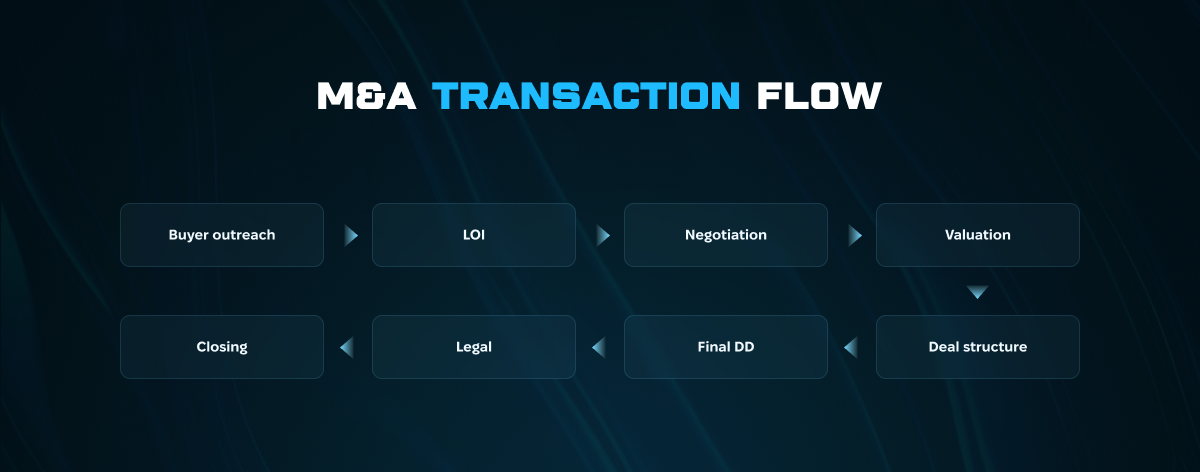
This stage will include intense conversations with your acquirer, advisors, legal team, and stakeholders. Your preparation up to this point determines how the whole process will take off.
A disciplined approach helps ensure a successful acquisition, smoother negotiations, and an outcome that reflects the true value of your business.
How To Position Small Business For Acquisition
Positioning a small business for acquisition starts with getting your finances in order so the buyer immediately sees clarity, stability, and predictable performance. Clean books, accurate reporting, and transparent cash flow make it easier for serious buyers to evaluate your company and ensure the acquisition moves forward without unnecessary delays.
At the same time, your operations must look organized and transferable. Buyers want to acquire a business that runs smoothly, has documented processes, and isn’t dependent on the owner for every decision.
A strong positioning strategy also includes preparing your sales process to show consistent revenue generation and repeatable results. When a buyer sees a system they can maintain or scale, the path to a successful transaction becomes far more straightforward.
Your internal leadership and your external support network matter as well. Working closely with legal advisors, financial experts, and an experienced M&A team helps you navigate negotiations, eliminate red flags, and protect your valuation.
Ultimately, positioning a small business for acquisition is about proving that the company is stable, low-risk, and ready for the next stage of growth under new ownership.
Common Mistakes & How To Avoid Them
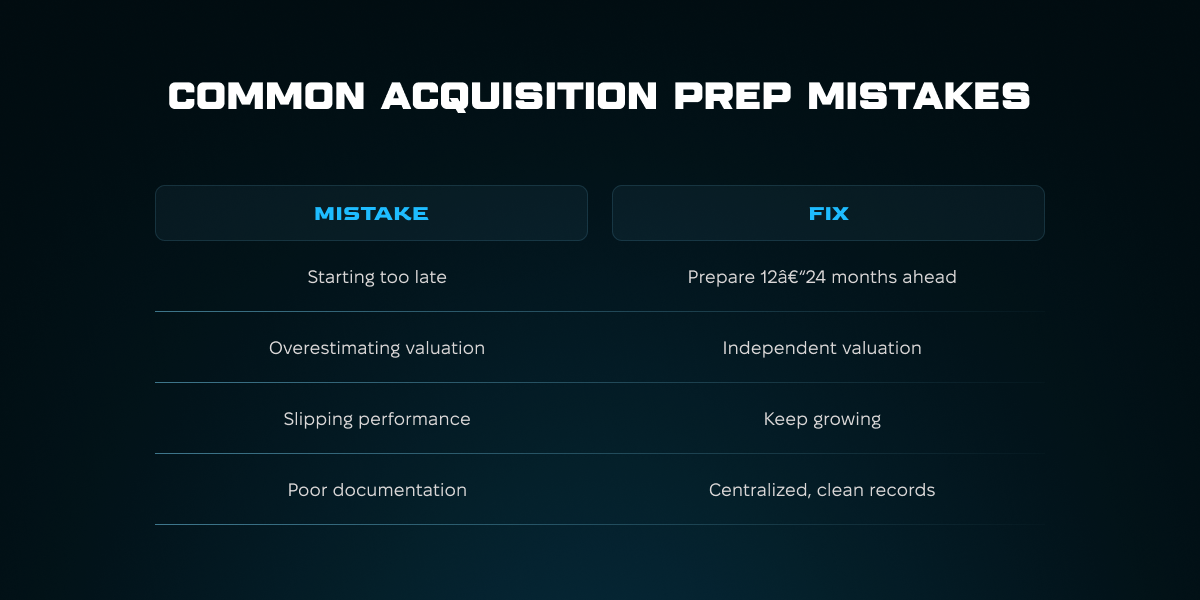
Of course, such a complex process quite often invites missteps. Some are small and fixable, others are serious enough to jeopardize the entire deal. Many owners simply don’t realize how easily an oversight, a missing document, or a poorly timed decision can derail months of preparation. Understanding the most common mistakes ahead of time gives you a real advantage.
Starting the Process Too Late
Owners often wait until they want to sell. But you should prepare for an acquisition at least 12–24 months before approaching any buyer.
Fix: Start early and build your systems. Take care of your numbers. Document everything.
Overestimating Valuation
Sellers often imagine a price disconnected from market reality. This creates friction and a deal collapse.
Fix: Get independent valuation guidance and understand how buyers assess your revenue stream, growth potential, and risk.
Running the Business Like It’s Already Sold
Once owners decide to exit, performance often slips.
Fix: Keep growing. Strong performance during the M&A process increases leverage and improves the final price
Poor Documentation
Missing contracts, outdated financials, or undocumented processes make your company look messy.
Fix: Organize all documentation. Keep records clean, updated, and readily accessible for the buyer’s due diligence team.
Preparing for an acquisition means building it deliberately. Mergewave Capital works with founders and owners to identify risks early, strengthen positioning, and structure transactions that protect value.
Speak with our M&A advisory team to assess your acquisition readiness, uncover value gaps, and build a clear path to a successful exit on your terms.

Key Takeaways
The success of an M&A transaction depends on early preparation, disciplined documentation, and a realistic understanding of your company’s strengths and risks.
A well-structured approach to M&A (initial planning-negotiation) helps you navigate the complexity of an M&A deal with clarity.
Preparing a clear exit strategy is essential. It ensures you can transition smoothly and position the buyer to take your company to the next level.
Thoughtful planning for the integration process reduces post-close friction and makes it easier for another company to build on what you’ve created.
When you’re navigating an M&A, clean financials, strong leadership, and documented systems raise your attractiveness and enhance your ability to ensure a successful outcome.
FAQ
How To Prepare Small Business for acquisition?
Focus on systematization, financial clarity, removing owner dependency, streamlining operations, and clearly showing future growth potential. These steps make your business more attractive and help ensure a smooth transition.
How to sell mid side business?
Mid-sized companies usually require a more formal acquisition plan, professional advisors, sophisticated valuation models, and well-structured deal terms. Expect a deeper due diligence process and more complex negotiation.
How to prepare a company for acquisition?
Start with an internal audit, clean up financial statements, resolve tax issues, assess risks, develop a strategic plan, and build a full due diligence package. Then identify acquirers, negotiate a letter of intent, and proceed with the acquisition through the full M&A process.
What are the common pitfalls and how to avoid them?
The main pitfalls include poor documentation, unrealistic valuation expectations, lack of preparation, and declining performance during negotiations. Avoid these by preparing early, organizing your records, keeping operations strong, and working closely with your advisors.
#M&A
#duediligence
#acquisition
#web3
Share this post
Ready to grow?
With our M&A expertise we are ready to help you achieve your strategic goals!
Connect with us